Our five programmes
Water, school, mothers’ health, digital skills and family incomes: five practical answers to five obstacles faced by children in the villages where we work. For each one, results are measured, published and explained.
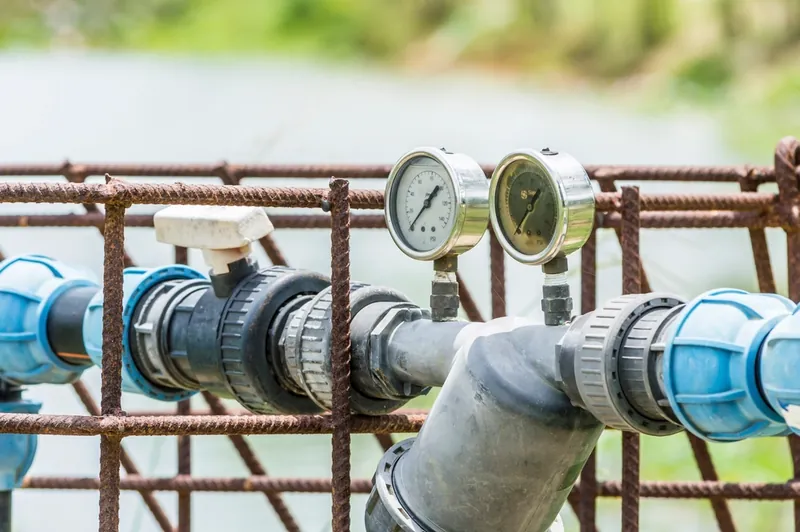
Solar boreholes
Water for All
The problem
In the villages where we work, fetching water can take up to three hours a day. It is most often done by girls, who arrive late at school, when they get there at all. Water from ponds, meanwhile, makes children ill.
Our response
- A borehole fitted with a solar pump and standpipes, drilled with craftspeople from the region.
- A water management committee with equal numbers of women and men, which sets a modest maintenance fee and keeps the accounts.
- Repair technicians trained locally and water quality tests twice a year.
Results, from 2011 to June 2026
- 42solar boreholes in service
- 52,660people served
- 97%of boreholes working at the June 2026 check
Where do we work?
Far North (Mokolo, Mora, Koza), Adamawa (Meiganga). See the projects on the map
What your gift makes possible
- €10 (6,500 FCFA) gives one person lasting access to clean water
- €14,500 (9,500,000 FCFA) funds a complete solar borehole for 1,500 people
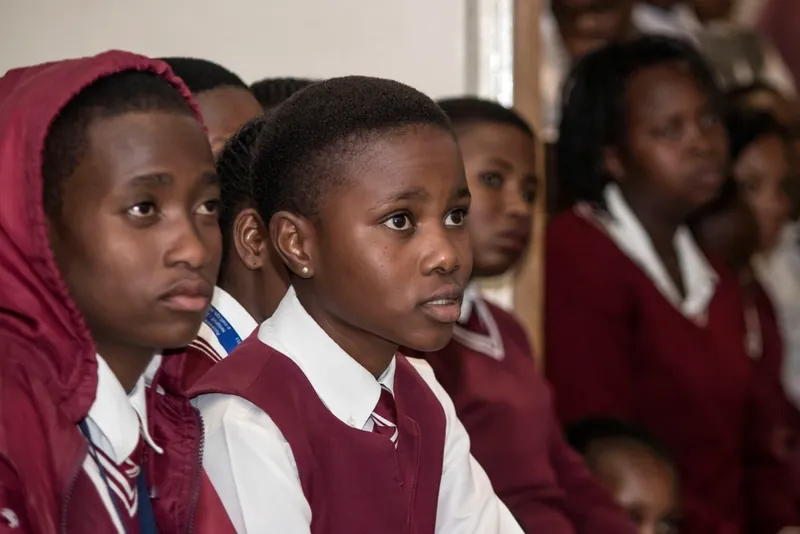
Kits and libraries
Full Schoolbag
The problem
In the villages where we work, the cost of supplies weighs heavily at every back-to-school. Exercise books, textbooks, a schoolbag: when families have to choose, it is often the girls who stay at home. And without light in the evening, homework has to wait until the next day.
Our response
- Kits handed out at school, with parents’ associations: schoolbag, exercise books, textbooks and solar lamp.
- School libraries and training for teachers in reading aloud.
- Attendance monitoring with school heads, to check that pupils stay in class.
Results, from 2011 to June 2026
- 12,500school kits handed out
- 38school libraries
- 9,200pupils supported
Where do we work?
East (Bertoua, Batouri, Bélabo), Far North (Maroua). See the projects on the map
What your gift makes possible
- €15 (10,000 FCFA) give one pupil a complete school kit
- €4 (2,500 FCFA) buys a book for a school library
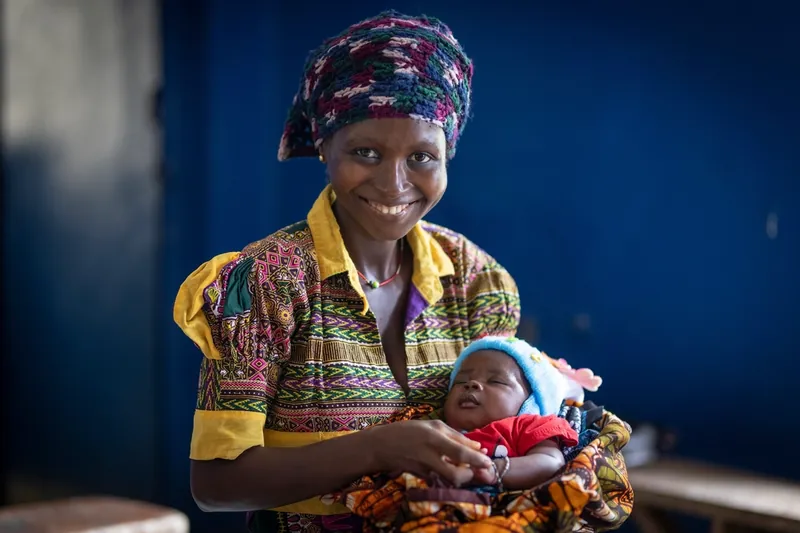
Antenatal care
Healthy Mothers
The problem
In the villages where we work, health centres are several hours’ walk away. Many women reach childbirth without having been seen once during pregnancy, and warning signs go unnoticed.
Our response
- Mobile antenatal clinics, run with the district’s public health centres.
- Community health workers, women from the village, trained to spot high-risk pregnancies.
- Clean-delivery kits and referral of difficult cases to the nearest hospital.
Results, from 2011 to June 2026
- 3,100women followed
- 14,800antenatal check-ups
- 120community health workers trained
Where do we work?
Adamawa (Ngaoundéré, Tibati), Far North (Kaélé). See the projects on the map
What your gift makes possible
- €5 (3,300 FCFA) funds an antenatal check-up
- €12 (8,000 FCFA) provides a clean-delivery kit
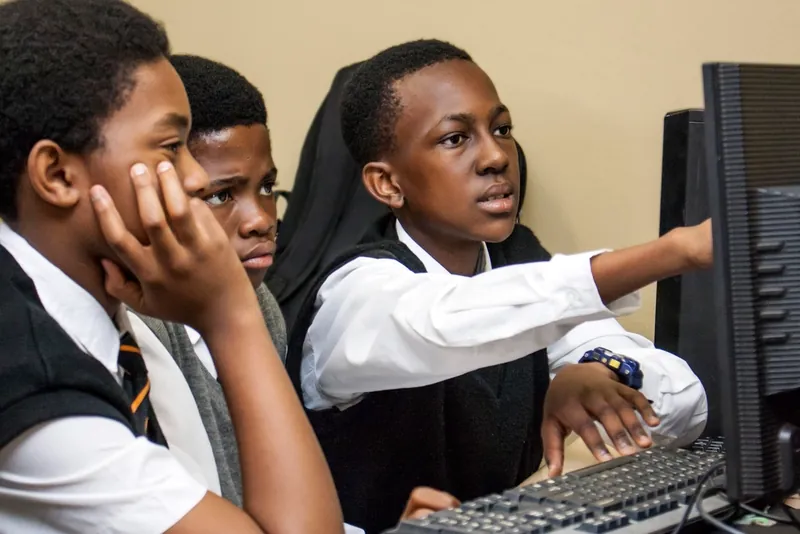
Digital rooms
Click Youth
The problem
Many students take their school-leaving exam without ever having used a computer. When they start training or their first job, the gap widens, especially for girls and for students far from the big cities.
Our response
- A room equipped with refurbished computers, set up in a public secondary school that looks after it.
- Teacher training, so that the room is used all year round and not only during the project.
- An introduction to office software and coding, then guidance towards digital careers.
Results, from 2011 to June 2026
- 4digital rooms
- 2,400young people trained
- 260refurbished computers
Where do we work?
Littoral (Douala, Édéa), West (Dschang). See the projects on the map
What your gift makes possible
- €180 (120,000 FCFA) funds a refurbished computer
- €25 (16,000 FCFA) pays for one month of internet access for a digital room
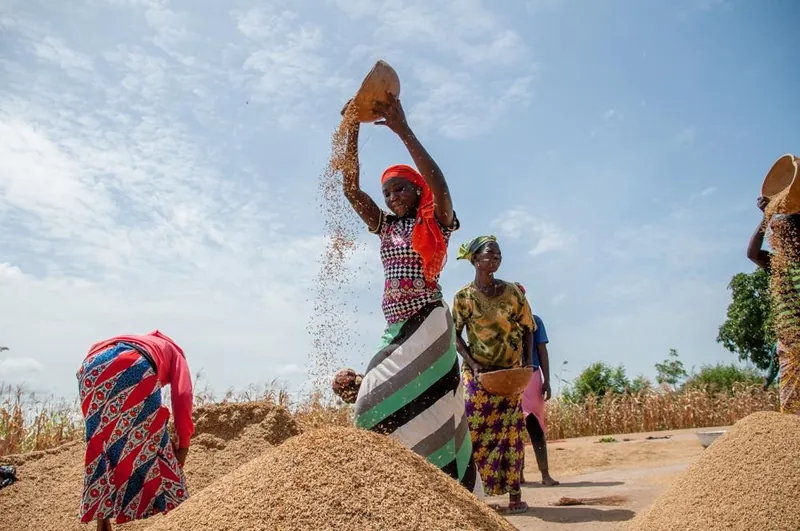
Mothers’ incomes
Women & Land
The problem
When mothers earn a regular income, children stay in school longer and eat better. But access to irrigation water, quality seeds and markets remains difficult for many women’s cooperatives.
Our response
- Market-gardening cooperatives created and run by the women themselves.
- Drip irrigation, quality seeds and small equipment.
- Training in management and access to the markets of Foumbot, Bafang and Douala.
Results, from 2011 to June 2026
- 27cooperatives
- 640women supported
- + 38%income after two seasons (internal survey 2025)
Where do we work?
West (Foumbot, Bafang). See the projects on the map
What your gift makes possible
- €100 (65,000 FCFA) equips a cooperative with a market-gardening kit
- €6 (4,000 FCFA) provides a packet of vegetable seeds
Impact calculator
What does your gift make possible?
Choose an amount: see what it funds in each of our five programmes.
With , you fund:
5 people have lasting access to clean water
3 complete school kits
10 antenatal check-ups
2 months of internet access for a digital room
8 packets of seeds for a cooperative
| Programme | €15 | €50 | €100 |
|---|---|---|---|
| Water for All | 1 person has lasting access to clean water | 5 people have lasting access to clean water | 10 people have lasting access to clean water |
| Full Schoolbag | 1 complete school kit | 3 complete school kits | 6 complete school kits |
| Healthy Mothers | 3 antenatal check-ups | 10 antenatal check-ups | 20 antenatal check-ups |
| Click Youth | — | 2 months of internet access for a digital room | 4 months of internet access for a digital room |
| Women & Land | 2 packets of seeds for a cooperative | 8 packets of seeds for a cooperative | 16 packets of seeds for a cooperative |
The interactive calculator needs JavaScript; this table gives a preview.
Monitoring and evaluation
How we measure what we announce
For funders and donors who want to check: our method comes down to four steps.
A baseline
Before each project, we measure the starting point: time spent fetching water, school attendance, number of antenatal check-ups, cooperative incomes.
Precise indicators
Each programme tracks three to five indicators, defined in the glossary of our annual reports (direct beneficiary, borehole functionality rate…).
Quarterly data collection
Our coordinators record the indicators every quarter, with check visits and school and health centre registers.
An external evaluation every three years
An independent firm evaluates our programmes (latest evaluation: 2024). The results, including the gaps, are published in the annual report.
Join us