Field
In Mokolo, the Foundation’s 42nd solar borehole is up and running
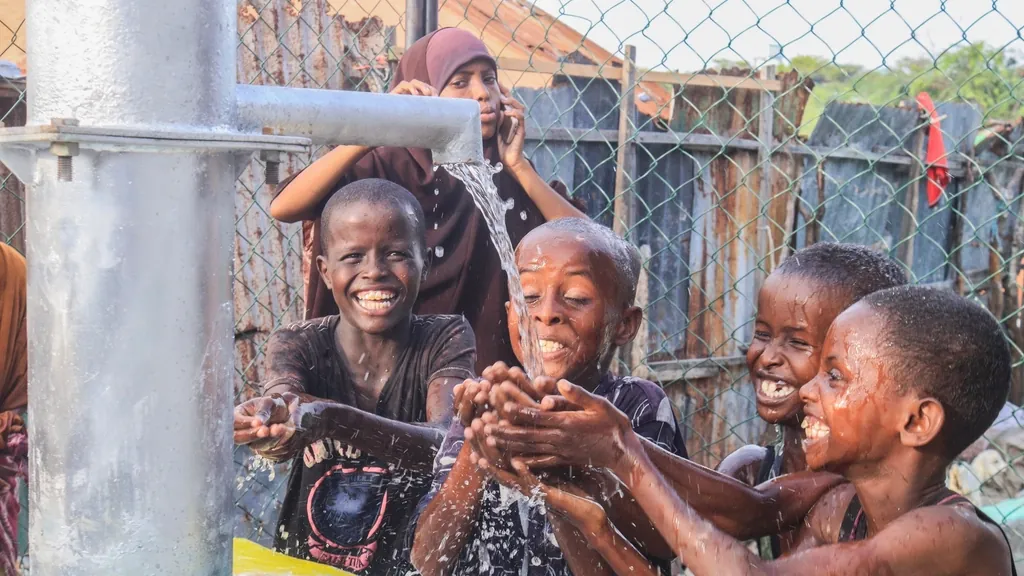
On 12 September 2026, in Mokolo, in the Far North of Cameroon, a standpipe opened for the first time near the market. The solar borehole that feeds it is Fondation Ndolo’s 42nd: it serves 1,500 residents, including the pupils of the neighbouring school.
Four stages, four months of work
The project began in May, like all of ours, with an assessment shared with the municipality. For two weeks, the Foundation team met neighbourhood leaders, the school head and the women who fetch water every morning, to choose together the borehole site and the locations of the six standpipes.
The borehole itself was drilled in June by a regional company, under the supervision of a hydraulic engineer. Water was found at a depth of 74 metres, tested, then declared safe to drink. In July and August, local craftspeople installed the solar pump, the water tower and the pipes.
The last stage, and not the least: a water management committee was set up, with equal numbers of women and men. It is chaired by a local woman, a market trader, who keeps the contributions register and decides, with the other members, when the standpipes open.
Water that must last
“A borehole that breaks down after two years helps no one. So we sorted out maintenance before the first drop of water.”
Each household pays a modest contribution, set by the committee according to what families can afford: a few hundred CFA francs a month. It goes into a repair fund, managed by the committee and overseen by the municipality.
Two repair technicians from Mokolo have been trained to maintain the solar pump. The water will be tested twice a year, and the Foundation team will monitor how the borehole works for five years before handing it over fully to the community.
What water changes, from the first morning
At the neighbouring public school, the head teacher noticed a first effect right from the start of term: pupils arrive on time. Until now, much of the class left before dawn to fetch water from a waterhole more than two kilometres away, and often missed the first lesson.
From now on, the farthest standpipe is less than ten minutes’ walk away, and the borehole supplies about 12 cubic metres of clean water a day, enough for the needs of the 1,500 residents. The Foundation will track pupil attendance with the school head throughout the school year.
Demonstration story: Fondation Ndolo and the people quoted are fictional.